dig333-devlog
Week 03 - DevLog
Outcomes
1. 📚 Read Chapter 03 - The Hello World Oscillator (39-45) in Electronic music from scratch (Pearson). Write a comment on one of Pearson’s phrases that speaks to you. (2-3 sentences)
“Thwacking a ruler while holding one end against a table sounds only so-so when you listen to it with your ears (or if you record it with a traditional microphone). With a piezo pickup underneath, however, it produces an earth-shakingly deep bass tone—perfect for your forthcoming late-’90s- inspired acid-trance-stomp EP.”
This particular phrase spoke to me because it shows how the impact of everyday actions entirely depends on scale. The thwack of the ruler against a table is only a mild and very fleeting sound to us, but creates fierce vibrations in a piezo pickup such that it creates a much more impactful bass.
2. Follow instructions in “My First Square Wave Oscillator” experiment (Pearson 59-71) to create a breadboard oscillator. Share a photo.
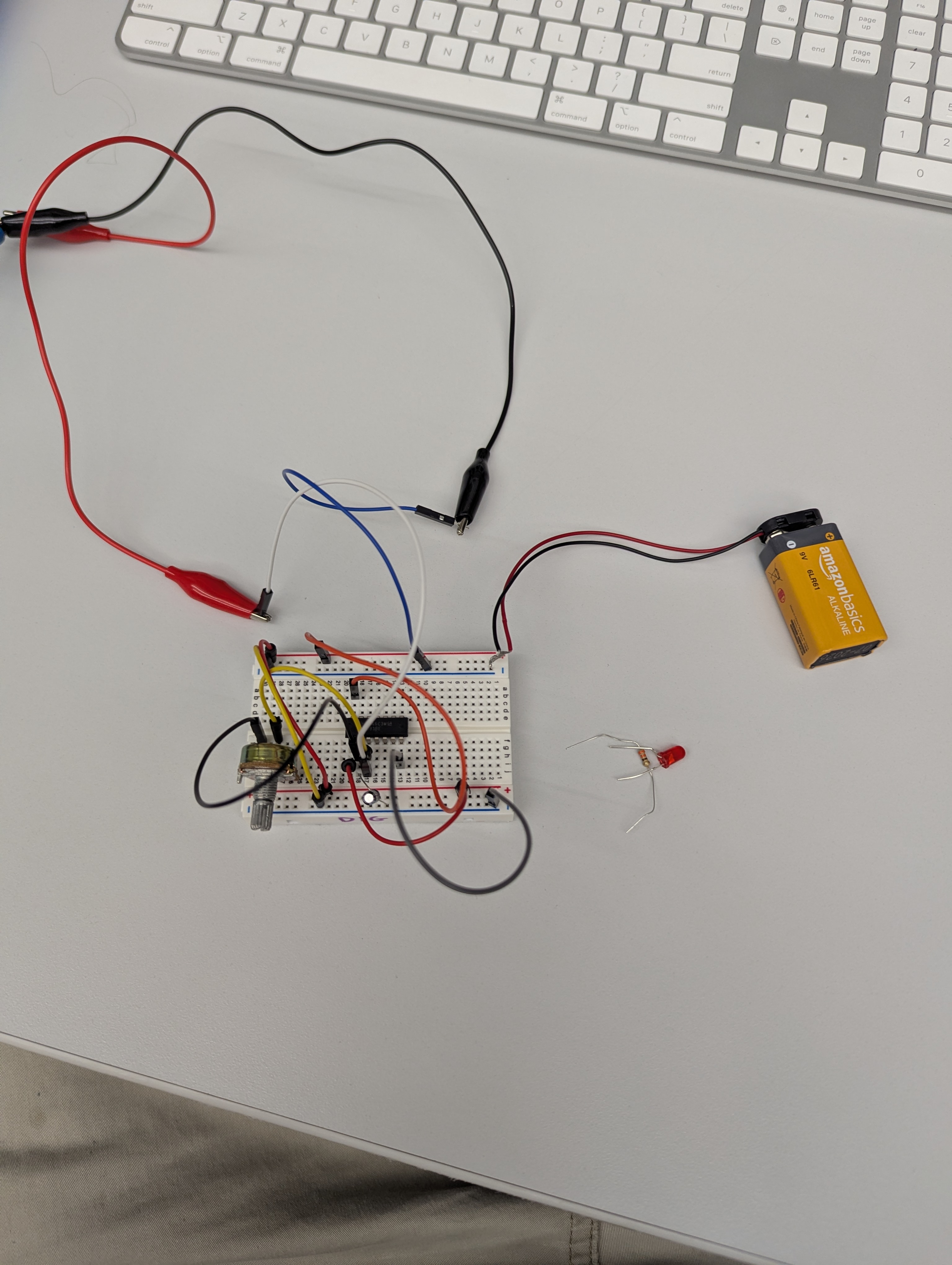
3. Create at least one variation on your oscillator inspired by four variations on the circuit. Share a video of your your device.
https://youtube.com/shorts/nlKeZB9vRZQ
4. 📚 Read Chapter 4 - Amps, Reverbs, and Talkboxes (72-75) in Electronic music from scratch (Pearson).
5. Once you start listening you’ll hear it everywhere. Share a link to a song that uses a synthesizer below.
https://www.youtube.com/watch?v=zEZEsyk6BSo
6. Watch Synthesizer Basics: Amplitude, Oscillators, Timbre and describe https://www.youtube.com/watch?v=c3udLCvoCC0
Amplitude: The height of a sound wave, which determines how loud or quiet a sound is. Higher amplitude = louder sound; lower amplitude = softer sound.
Oscillators: The parts of a synthesiser that generate sound by producing repeating electronic waveforms.
Timbre: The unique tone or character of a sound even if it has the same pitch and loudness as another sound.
7. What is the difference between an analog and digital component?
Analog components are continuous and mechanical. Digital components take discrete values.
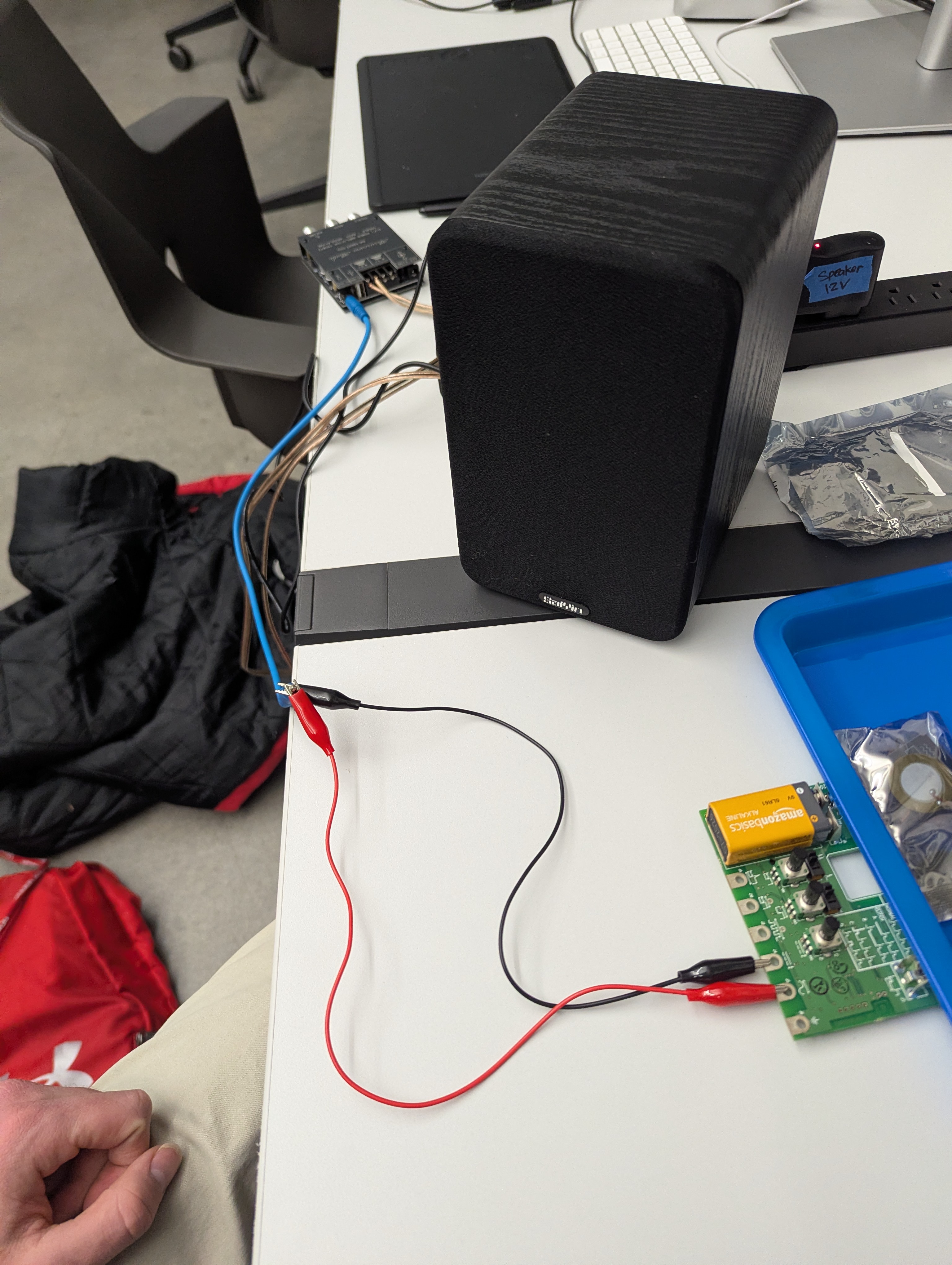
8. 👉Activity: Analyze square waveforms with an oscilloscope. On the Snap-on Waveform demo board, which pot controls variable voltage (duty cycle) and which controls variable frequency (PWM slides)? What is a common use of each?
Part number 13 controls the frequency, and therefore modifies the pitch. Part number 8 controls the voltage, and therefore modifies the amplitude/volume.
9. Post a photo of your Snapon board testing.
10. List one thing you learned in the Learning Synth Playground by Ableton
In an envelope, if the attack is longer than the time it takes to ascend at the beginning, then it will skip to the descent at the attack time regardless.